Retreats in the Cotswolds
England’s Quiet Luxury for Corporate Offsites, Wellness Escapes, and Creative Gatherings
There is a particular shade of honey that appears on Cotswolds stone when the day is undecided—when the clouds are still negotiating with the sun, and the air has that rinsed, post-rain smell that makes even your email anxiety feel slightly overdressed. A footpath cuts past a dry-stone wall and into a field where sheep, in their ancient role as local civil servants, stare at you as if you’ve arrived without an appointment. Somewhere nearby, a kettle is going on. Somewhere else, a long wooden table is being set with the seriousness of a minor ceremony: mugs placed, notebooks opened, pens borrowed and then, inevitably, never returned.
In the Cotswolds, the world doesn’t exactly slow down. It simply stops pretending that speed is a virtue. You feel it in small things: the way lanes insist you yield to oncoming traffic with a kind of polite brinkmanship; the way village life is arranged around walking rather than conquering; the way a pub lunch arrives with calm certainty, as if it has all the time in the world, because—here—it does.
This is why the Cotswolds have become one of England’s most reliable stages for retreats of all kinds. Not the performative sort, where everyone returns home with identical tote bags and a new habit of saying “journey.” The Cotswolds are better suited to the quieter version: the offsite that actually changes how a team works; the wellness retreat that leaves people feeling more like themselves than before; the creative gathering where ideas return, a little windblown, like dogs that ran off for an hour and came back pleased with their own independence.
What you get here is not spectacle. It’s permission.
Why the Cotswolds Suit Every Kind of Retreat
The obvious reasons are easy: good-looking countryside, historic villages, and a certain English talent for comfort that doesn’t announce itself. But the more useful reasons—the ones that make a retreat work—have to do with pacing.
The Cotswolds are walkable in a way that changes people. Not “we did a hike and now we’re a team” walkable. More like: you can leave a meeting and, within minutes, be on a footpath that makes it possible to keep talking without feeling trapped by fluorescent lighting or corporate posture. Conversation loosens when people are side by side, moving at the speed of a decent thought. The landscape does something similar: it’s present without demanding attention. Nature, here, doesn’t cosplay as wilderness. It’s fields, hedgerows, and woods that feel lived-in, as if they’ve had generations of practice being restorative.
Then there’s proximity. The Cotswolds are close enough to London to be convenient, but far enough to feel like a different operating system. That matters for retreats. If a location feels too easy, people don’t fully arrive; they keep one foot in their regular lives. But if it’s too far, the travel becomes the story, and the retreat becomes a reward for enduring it. The Cotswolds hit a sweet spot: near, but not nearby; accessible, but not casual.
And the villages function like a built-in itinerary. You don’t need to over-program. Between towns like Stow-on-the-Wold, Chipping Campden, and Burford, there’s a natural rhythm: a morning walk, a lingering lunch, a small shop you didn’t plan to enter, a conversation that continues because nothing is rushing it along. Even bigger neighbors—Bath with its Roman gravitas, Cheltenham with its Regency polish—add dimension without turning the retreat into a sightseeing sprint.
Corporate Offsites That Don’t Feel Like Work
Corporate offsites often fail for a reason that no one wants to say out loud: they reproduce the office, but with worse coffee and more forced vulnerability. You fly somewhere, call it “strategic,” and then spend two days trapped in a conference room arguing about fonts on a slide deck.
The Cotswolds offer a different option: you can hold serious conversations without the institutional mood lighting. In an exclusive-use country house, the setting does some of the work for you. Meetings happen in rooms with actual character—libraries, dining rooms, sunrooms—spaces that invite both focus and softness. Breakout sessions can be a stroll instead of a shuffle to a smaller room. Dinner can be a long table rather than a polite scattering of plates.
The best offsites here are designed with restraint. You want enough structure to make progress, but enough openness for unexpected clarity. A morning session, an afternoon workshop, a walk between them, a dinner where the conversation shifts—without anyone declaring a “fireside chat.” The Cotswolds are good at this because they encourage a natural alternation between concentration and release.
If you’re planning an offsite for leadership teams, founders, or People/HR leaders, one of the most underrated luxuries is ease: transfers that don’t become a logistical scavenger hunt, venues that can accommodate working sessions and downtime, and a setting that doesn’t turn into a distraction masquerading as “culture.”
If you’d like, Venue Retreat can curate a short list of Cotswolds venues that match your group size, work style, and budget—exclusive-use options that support real productivity without feeling corporate.
Wellness Retreats With Real Quiet
Quiet is not the absence of sound. It’s the absence of obligation. The Cotswolds do quiet well because they’re not trying to impress you. There’s no pressure to keep up, to “maximize,” to prove that your rest is efficient. The landscape doesn’t demand a dramatic revelation. It just offers you a place to exhale.
For yoga and wellness retreats, the Cotswolds work particularly well for groups who want softness without fuss. Spaces with natural light, warm interiors, gardens that feel like extensions of the house, and rooms where people can truly rest. The weather, famously, does what it wants—but that unpredictability can be oddly therapeutic. A rainy afternoon becomes permission to slow down even more; a bright morning feels earned.
Wellness here can be uncomplicated: breathwork in a quiet room, yoga in a space with wooden floors that don’t squeak, long walks that don’t require a survival mindset, meals that feel grounding rather than performative. And because you’re not far from towns and villages, you can add gentle extras a spa session, a market visit, a pub lunch—without the retreat losing its center.
The point is not to escape life. It’s to return to it with fewer sharp edges.
Creative Retreats: Where Ideas Go When They Need Air
Ideas, like people, behave differently when they’re not being watched. In the Cotswolds, there’s a strange generosity in the way time opens up. A morning can be devoted to writing or making or thinking without the usual internal heckler insisting you check your phone “just in case.”
Creative retreats benefit from the region’s quiet structure: enough stimulation to keep the mind alive, enough calm to let it settle. A walk near Broadway feels like it was designed to coax a second draft out of you. An afternoon in a Cotswold garden gives you permission to stare at the same leaf for ten minutes and call it research. Even the small towns—Cirencester with its Roman layers, Cheltenham with its cultural calendar—offer a low-key sense of presence that doesn’t compete with the work.
The best creative gatherings here leave space for solitude and community. A shared breakfast. A morning block of deep work. Optional walk. Afternoon check-in. Dinner. A reading, if that’s your thing. Or not. The Cotswolds don’t force a narrative on you. They let you write your own.
Best Times of Year for a Cotswolds Retreat
The Cotswolds are not a single mood. They’re a repertoire.
Spring is brisk and hopeful, with gardens in the middle of becoming themselves. It’s a good season for new beginnings—planning, strategy, lighter wellness programs, creative starts.
Summer is longer days, dinners that stretch, and a sense that time can be persuaded to behave. It’s ideal for retreats that balance work with outdoor rhythm: walks, garden sessions, open windows, late conversations.
Autumn is quietly dramatic. The light turns softer, the countryside becomes more introspective, and the pace naturally slows. It’s a strong choice for leadership retreats, reflective wellness programs, and creative residencies that benefit from depth.
Winter is for groups who understand the appeal of a fireplace and a focused agenda. It can be the most productive season for corporate offsites: fewer distractions, more togetherness, and the kind of evening coziness that makes people talk honestly.
Getting There and Getting Around
One of the Cotswolds’ most practical virtues is that it doesn’t require heroics to reach. Most groups arrive via London airports, then travel onward by train and car. There are also regional options depending on your starting point, and Bath’s connectivity can be useful if you want to combine city ease with countryside calm.
Once you’re in the region, the Cotswolds reward planning. Roads are beautiful and narrow; navigation is straightforward but not always quick. For retreats, the simplest choice is usually private transfers or a dedicated driver—especially if your schedule includes dinners out, multiple locations, or guests arriving at different times. For smaller groups, a mix of transfers and taxis can work, but the goal is the same: remove friction so people arrive feeling like humans, not logistics managers.
Venue Retreat can advise on routing and transfers as part of the planning—because nothing undermines “quiet luxury” like a WhatsApp thread titled “Where is everyone??”
What to Look for in a Retreat Venue Here
The Cotswolds are full of beautiful places. The trick is finding the ones that work for your retreat, not just your camera roll.
Exclusive use changes everything. It creates psychological safety, makes schedules flexible, and protects the mood. For corporate groups, it means confidentiality and focus. For wellness retreats, it means quiet. For creative gatherings, it means no accidental audience.
Layout matters more than style. You want spaces that support both gathering and separation: a main room for meetings or practice, smaller corners for breakout conversations, and enough breathing room that guests aren’t forced into constant togetherness.
Dining should feel natural. A good long table can be the heart of the retreat. Kitchens that can support excellent catering—or venues that partner well with chefs make the experience feel seamless rather than staged.
Sound is a hidden dealbreaker. Old houses can be echoey; some rooms swallow voices, others amplify them. For workshops, meditation, and meetings, acoustic comfort matters. So does heating, lighting, and the general sense that the venue has been designed for actual inhabiting—not just admiring.
Outdoor access should be easy. Gardens, footpaths nearby, or even a quiet lane for a short walk between sessions these are not “extras.” They are the glue that makes a retreat feel restorative.
This is where curation becomes more valuable than scrolling. Venue Retreat matches groups to venues based on the real requirements—privacy, flow, capacity, vibe, and logistics then presents a short list, not a spreadsheet.
A Sample 3-Day Retreat Rhythm
A good retreat schedule should feel like a well-cut coat: structured enough to hold its shape, relaxed enough to move in.
Day 1: Arrival and Landing
Guests arrive, settle in, and have time to breathe before anything “official” begins. A low-stakes welcome—tea, a simple walk, a gentle opening circle or intro session. Dinner together at a long table, followed by unprogrammed evening space.
Day 2: Deep Work and Spaciousness
Morning focus: strategy session, workshop, or a longer wellness practice. A proper lunch. Afternoon: breakouts, coaching, creative time, or optional activity (walk, sauna/spa, a quiet town visit). Evening: dinner, then something optional—reflection, reading, informal discussion—without forcing togetherness.
Day 3: Integration and Departure
A final morning session that gathers insights and turns them into something usable: decisions, commitments, next steps, or personal takeaways. Brunch. Departures that aren’t panicked.
The rhythm is the point. People leave feeling both held and free.
How Venue Retreat Helps
Planning a retreat is oddly similar to hosting a dinner party for twenty people you respect: the stakes are higher than they seem, and the details matter more than anyone admits. A venue can be gorgeous and still wrong—too echoey, too cramped, too “wedding weekend,” too far from everything, too fussy for a team that wants simplicity.
Venue Retreat exists to make the process calmer and sharper. We curate venues based on what actually supports your retreat: the way your group works, rests, and connects. We match you to the right spaces often exclusive-use then handle the shortlist with clarity: a few strong options, properly vetted, aligned with your needs. We protect the vibe and the logistics so you can focus on the purpose.
If you’re planning a Cotswolds retreat corporate, wellness, creative, or something in between tell Venue Retreat what you need and we’ll curate a short list that fits, without the overwhelm.
Closing
Back on that footpath, the clouds finally make up their mind. Light slides across the stone as if someone adjusted a dimmer switch. The sheep resume their bureaucratic staring. In the distance, a church bell marks the hour with the unhurried authority of a place that doesn’t measure time by notifications.
You can come to the Cotswolds for the aesthetics, and you’ll get them stone, fields, gardens, that particular English competence at comfort. But what you’ll keep, if you do it right, is something harder to photograph: a slower internal pace, a clearer mind, and the sense that good work—and real rest—can happen in the same day, at the same table, with the same people.
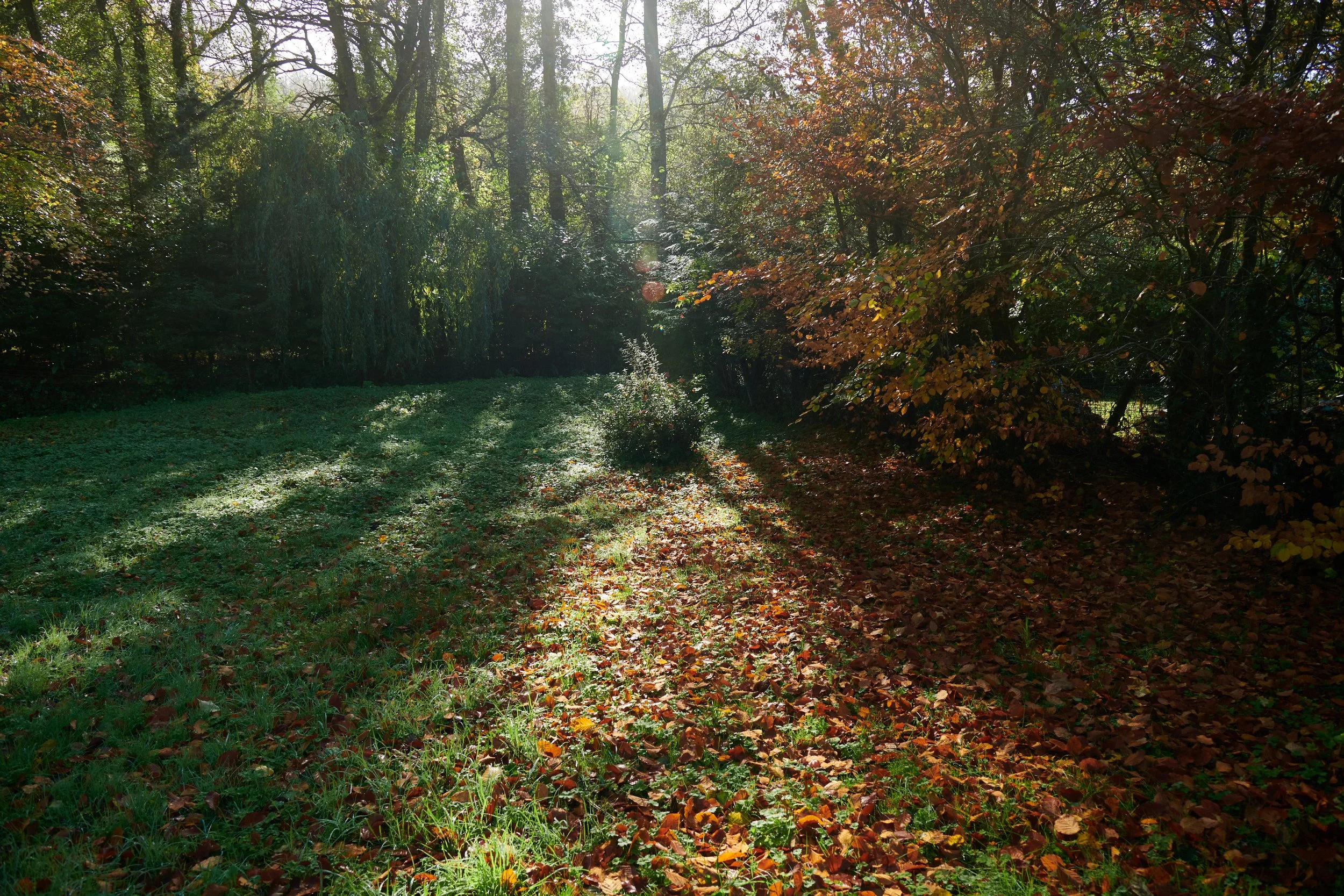
Experience English Countryside
A charming and elegant retreat venue in a special part of england.
Surroundings
We are surrounded by fields, with a nearby farm, and there are excellent hikes and biking routes all around. Just up the lane you’ll even find some wonderfully serene alpacas you can befriend!
The retreat is located in Painswick Village, known as “The Queen of the Cotswolds”, in Gloucestershire. It’s a quintessentially English village, full of honey-coloured Cotswold stone cottages and elegant historic homes.
We’re in the Stroud Valley, encircled by five valleys with rolling hills and breathtaking views. The famous Rococo Garden is here, along with charming spots like boutique hotels offering great food and drinks, wisteria-covered terraces, and spectacular vistas. Nearby you’ll also find the Cotswold Water Park lakes and beautiful woodland walks.
Travel is easy: Stroud Station has regular direct trains from London Paddington in just 1 hour 20 minutes. We’re also close to Cheltenham, Gloucester, Tetbury, Cirencester, and Minchinhampton where cows roam freely and are often seen wandering into the village!
Mood Board
Venue Details
Type of Venue: Retreat Center
Rooms: 4
Beds: 7
Max Accommodation Capacity: 8
Max Event Capacity: 40
# of buildings: 1
Rooms
Faclities
Yoga Space
Yoga Mats
BBQ
Lawn,
Fire pit,
Trampoline,
Private stream
Services:
A range of holistic healing modalities including mindfulness meditation, quantum meditation, earthing, therapeutic nature walks and leadership coaching
Prices
Price per week From: €3,500
Price per night from: €800
Price per person per night from: €200